


ShortFly
Conservative Authority
I approached ShortFly as an entertainment app for quick drama viewing rather than as a full replacement for a traditional streaming service. Its promise is simple: help me find a short story and start watching without a long decision process. That makes it appealing when I have a few spare minutes, want something more focused than endless social feeds, or feel like beginning a drama without committing to a long series immediately.
The app is developed by Conservative Authority and is available free of charge, although individual in-app purchases range from around eight to thirty dollars. It is rated for Teen users, runs on devices using Android six or later, and currently appears as version 1.0.4. Those details matter because the experience is aimed at a fairly broad mobile audience, but younger users and anyone sharing a device should still pay attention to the content rating and purchase prompts before watching.
Getting from the first launch to a worthwhile viewing session
What to expect when you open ShortFly
My first expectation would be a compact, mobile-first drama experience: browse, choose a story, and begin watching quickly. The store summary positions it as a place to dive into a new drama, so I would not approach it expecting a general entertainment hub with music, games, news, or a large collection of unrelated media. Its strongest identity is the short-drama format and the speed of moving from curiosity to viewing.
That focus is useful, but it also creates a trade-off. A conventional streaming app is usually better when I already know the exact show, need a large back catalog, want carefully organized genres, or plan a long evening of viewing. ShortFly makes more sense when the decision itself is part of the problem. If I am waiting for an appointment or taking a break between tasks, a short dramatic story can feel easier to start than a full-length show.
The app has attracted over one million installs and holds an average rating of 4.8 from around forty thousand ratings. That gives me a reasonable signal that many users enjoy the basic concept, but I would still treat the rating as a starting point rather than a guarantee. Short-form entertainment is personal: someone who enjoys quick cliffhangers may find the format addictive, while someone who prefers slow character development may find it rushed.
Related News

Why WhatsApp Messenger Still Makes Everyday Communication Feel Easy

Jurassic World: The Game Is the Better Dino Tycoon for Strategic Players

Threads in Real Life: Who Should Join, Lurk, or Leave

How SHEIN Turned Shopping Into an Endless Content Feed

How to Make Fortnite Feel Smarter on Mobile

Should You Switch to Microsoft Outlook on Mobile?
Making the first setup less frustrating
For a first-time user, I recommend beginning with a simple goal: do not try to understand every option before watching. Install the app, open it when you have enough time for an uninterrupted first session, and look for the clearest drama entry point. The fastest way to judge whether the format suits you is to watch enough of one story to understand its rhythm, rather than jumping between several titles after a few seconds each.
I would also check the device and account context before handing the phone to a younger viewer. The Teen content rating is an important part of the setup decision, especially on a shared tablet or family phone. Free installation does not mean every part of the experience is necessarily included without charge, because ShortFly offers in-app items priced from around eight dollars to thirty dollars each. I would avoid confirming any purchase until I understood exactly what that item unlocks and whether it is intended for a single story or a broader viewing benefit.
That purchase awareness is one of the most practical habits for using the app comfortably. A user who treats the application as completely cost-free may feel surprised when a tempting continuation or premium-looking option appears. I prefer to decide a personal limit before browsing. If I only want to sample the service, I can stay with the free portion and judge the storytelling first. If I am willing to pay, I would do so deliberately rather than because a cliffhanger created pressure in the moment.
Gallery
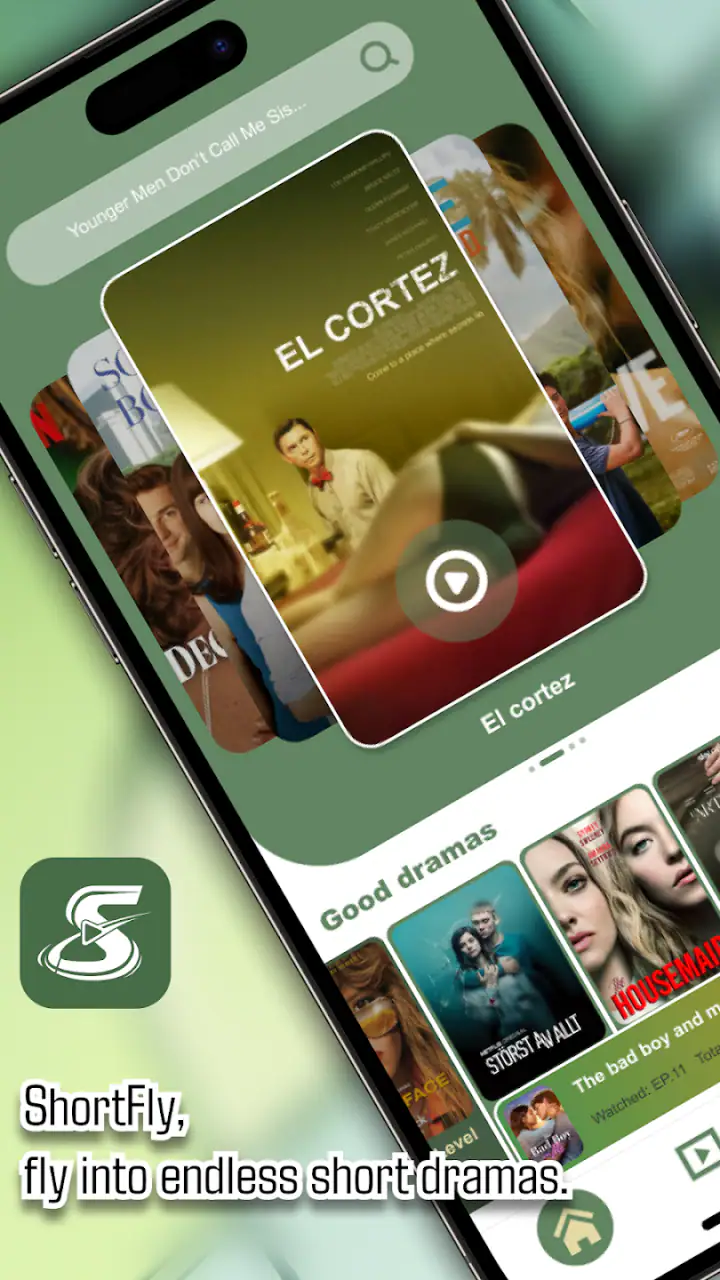
The first meaningful success: finding a drama worth continuing
The first successful action is not simply opening a video. It is finding a story that gives me a reason to return. I would browse with a specific mood in mind, such as romance, conflict, suspense, or a quick emotional break, and then choose one title instead of treating the catalog like a roulette wheel. This small decision makes the app feel more purposeful and helps me tell whether the recommendations are working for my taste.
A realistic everyday scenario would be a commute with a short transfer between trains. I might open ShortFly, select one drama that looks immediately appealing, and watch during that gap without starting a huge series that I will forget by the evening. Later, I could return when I have another break. The benefit is not only speed; it is the ability to fit a narrative moment into an otherwise fragmented day.
Another useful workflow is to use the first session as a quality test. I would pay attention to whether the opening establishes the characters quickly, whether each segment gives me a satisfying development, and whether the app makes it easy to continue. If the story relies too heavily on abrupt cliffhangers without enough payoff, I would be cautious about spending money on further access. Short drama can be effective because of its pace, but pace should not replace substance.
For that reason, I would not judge the app solely by how quickly it makes me want the next part. A strong first session should leave me curious while still giving me some sense of progress. If I finish a viewing period feeling that nothing meaningful happened beyond a sales prompt, the convenience is not enough. This is where my own patience becomes a useful filter: the app is best when its short format respects the viewer’s time.
Common confusion around free viewing and purchases
The word “free” can create the wrong expectation. ShortFly costs nothing to install, but the presence of in-app purchases means the complete path through a drama may involve optional spending. I would therefore separate three questions in my mind: Can I open and explore the app without paying? Can I watch enough to decide whether I like a story? And does continuing that story require an item? Those are different questions, and answering them separately prevents disappointment.
I would also avoid assuming that a high rating means every drama will match my preferences. The rating reflects broad user satisfaction with the app, not a personal recommendation for every title or every episode. If I prefer polished, long-form productions with extensive supporting characters, I may still prefer a conventional streaming platform. ShortFly’s appeal is narrower and more immediate: it is designed around the impulse to start something now.
Another possible source of confusion is the difference between short length and low commitment. A short drama may take less time per viewing session, but cliffhangers can encourage repeated visits. That can be enjoyable, yet it can also turn a quick break into a longer habit than planned. I would use a timer or decide in advance how many segments I want to watch, particularly during work breaks or late at night.
The Teen rating should also be treated as a practical viewing guide, not as a promise that every scene will suit every teenager. Content comfort varies widely between families. I would preview the experience myself before recommending it to a younger member of the household, and I would make sure purchase controls are protected on any shared device.
How it compares with familiar entertainment alternatives
Compared with a standard streaming service, ShortFly appears more convenient for quick discovery and less suitable for a carefully planned movie night. Traditional services normally win when I want established films, longer episodes, profiles for several family members, or a broad range of genres in one subscription. They also tend to make the cost structure easier to understand when access is tied to a recurring plan, although that does not automatically make them cheaper for every viewer.
Compared with social video feeds, ShortFly offers a more intentional reason to open the app. A feed may provide faster novelty, but it can scatter my attention across unrelated clips. A drama-focused app gives me a narrative thread to follow. The trade-off is that I have less of the spontaneous variety that makes social platforms entertaining, and I may encounter stronger pressure to continue a story after an emotional turning point.
Compared with reading a serialized story, the app is likely to suit someone who wants visual and dramatic presentation with very little preparation. Reading gives me more control over pace and often makes it easier to stop at a natural point. ShortFly is more immediate, but that immediacy means I am accepting the app’s presentation and viewing rhythm rather than creating my own.
Three practical habits that improve the experience
My first tip is to choose a viewing window before opening the app. This sounds minor, but it changes the experience from passive scrolling into a small entertainment plan. A ten-minute break, a quiet evening, and a shared family tablet are three different situations. I would use the app freely in the first case, review the purchase path carefully in the second, and apply the Teen rating and account safeguards in the third.
My second tip is to evaluate a story by its early payoff, not just its hook. A dramatic opening can be designed to make me tap immediately. I would continue only if the next section develops the premise, reveals something about the characters, or creates a conflict I genuinely want to understand. This is especially important before paying for an item, because emotional curiosity alone is not the same as good value.
My third tip is to keep a clear boundary between sampling and collecting. If I open every promising drama at once, I may end up with many unfinished stories and no clear favorite. I would sample one or two, choose the one with the strongest first impression, and return to it later. That approach makes the short format feel more like a curated break and less like another feed demanding attention.
A fourth useful habit is to use the current version as a reason to stay observant rather than as a reason to expect perfection. Version 1.0.4 suggests a relatively early stage of the product’s life. I would update normally when updates are offered, but I would also be patient with small changes in navigation or presentation. Early users may see the experience evolve, which can be positive, though someone seeking a mature, highly predictable platform may prefer an established alternative.
Who will enjoy it, and who should skip it
I would recommend ShortFly to viewers who like dramatic hooks, short sessions, and the feeling of discovering a new story without planning an entire evening. It is particularly suitable for people who often have irregular pockets of free time and want entertainment that can begin quickly. It can also suit viewers who are curious about short-form drama but do not want to commit to a long subscription before knowing whether the format works for them.
I would be more cautious about recommending it to someone who wants a completely free viewing experience from beginning to end. The in-app purchase range makes it important to understand the access path before becoming invested. I would also steer away from it for viewers who dislike cliffhangers, prefer substantial episode lengths, or need strong parental control confidence for children younger than the Teen rating suggests.
It is not my first choice for a family movie night, a serious film enthusiast, or someone who wants a deep catalog with predictable subscription access. In those situations, a conventional streaming service may offer a better balance of breadth, continuity, and household convenience. ShortFly earns its place when immediacy matters more than range.
My next step after the first session
After trying one drama, I would make a simple decision rather than browsing indefinitely. If I enjoyed the pacing and understood the purchase boundaries, I would continue with that story during planned breaks. If I liked the concept but not the first title, I would try another mood before judging the entire app. If both the storytelling and the payment flow felt unsuitable, I would stop there instead of forcing the experience.
That is the reassuring part of the app’s format: the test can be relatively focused. I do not need to reorganize my entertainment habits to discover whether short drama suits me. I can use one ordinary break, observe how the story develops, and decide whether the convenience outweighs the limitations. The important thing is to treat the free entry as a chance to evaluate the experience, not as an invitation to purchase automatically.
Overall, ShortFly is a focused entertainment app with a clear use case: quick access to dramatic stories when I want something more structured than random clips. Its strong rating and broad install base make it worth trying, while the Teen rating and paid items call for sensible household and spending awareness. I would recommend it to viewers who enjoy compact, emotionally direct storytelling and can set their own limits. For long-form fans or anyone demanding an entirely free catalog, another option will probably be a better fit.
FAQs for ShortFly
What is ShortFly, and what can I do with it?
ShortFly is designed for users who want to discover, watch, and interact with short-form video content in a fast, mobile-friendly environment. Depending on the version available in your region, you may be able to browse personalized clips, follow creators, like or comment on posts, share videos, and upload your own content. The exact tools and categories can vary by platform and app update.
Is ShortFly free to download and use?
ShortFly can generally be downloaded without an upfront charge, allowing users to explore its main content and social features for free. However, availability of premium options, advertising, virtual items, subscriptions, or other in-app purchases may depend on the current release. Before confirming a purchase, review the price, billing frequency, and cancellation terms shown in the Google Play Store or Apple App Store.
Does ShortFly require an account or personal information?
Some features may be available without registration, but an account is usually needed for personalized recommendations, saving content, following creators, commenting, uploading videos, or synchronizing activity across devices. During setup, ShortFly may request details such as an email address, username, age, or profile information. Check the app’s privacy policy and permission requests before creating an account.
Is ShortFly safe for children and teenagers?
Parents should review ShortFly carefully before allowing a child or teenager to use it. Short-video platforms can include user-generated material, advertising, public comments, links, and interactions with strangers, so content may not always be suitable for every age group. Check whether ShortFly provides age restrictions, reporting tools, blocking controls, privacy settings, and parental controls in your country.
What should I check before downloading ShortFly?
Before installing ShortFly, confirm that you are downloading the official listing from Google Play or the Apple App Store rather than an unfamiliar third-party website. Check the developer name, recent reviews, required permissions, supported Android or iOS version, download size, and latest update date. It is also worth reviewing privacy practices, account requirements, advertising, and any in-app purchase conditions.
Pros
- Quick access to short-form videos with a simple
- easy-to-learn interface.
- Personalized content feed helps surface videos matching your interests.
- Built-in sharing tools make sending clips to friends fast and convenient.
- Lightweight design generally feels responsive on modern Android and iOS devices.
- Discovering new creators and trending clips is straightforward.
Cons
- Content quality can vary widely
- with limited moderation on some videos.
- Frequent scrolling may encourage extended screen time without clear stopping points.
- Personalization may feel repetitive after watching similar topics for a while.
- Some features or content may depend on your region or account status.
- Video playback and uploads can consume considerable mobile data.


